
Retractable Versus Fabric Banner Stands Compared
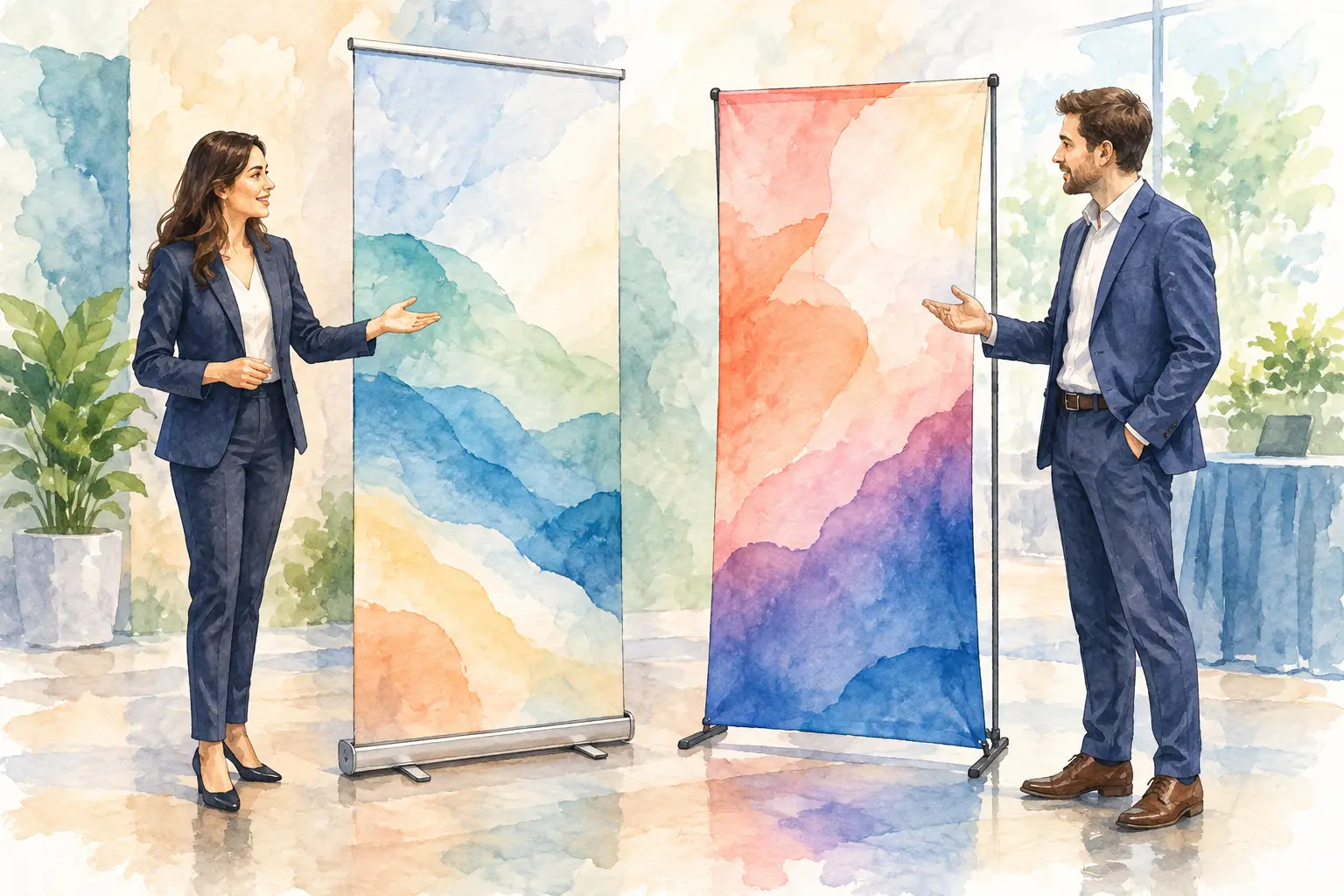
A display can look impressive in a product photo and still be the wrong fit for your event schedule, booth footprint, or brand message. When choosing retractable versus fabric banner stands, the better option is not simply the one with the larger graphic area. It is the stand that your team can transport, set up, reuse, and present with confidence every time it matters.
For a one-day sales event, a fast-moving trade show calendar, or a retail promotion that changes with the season, the details of the display system affect the experience as much as the printed design. Here is how to make a choice that supports your goals without overbuying or settling for a display that does not match your brand.
Retractable Versus Fabric Banner Stands: The Core Difference
A retractable banner stand, often called a roll-up banner, stores the printed graphic inside a protective base. To set it up, pull the banner upward and secure it to a support pole. When the event ends, the graphic retracts back into the base, ready for its carrying case.
A fabric banner stand uses a printed stretch-fabric graphic that fits over or attaches to a lightweight frame. Many styles use a pillowcase-style graphic that zips closed at the bottom, creating a smooth, taut display. Others use fabric panels and frame systems designed for backdrops, curved walls, counters, or large-format exhibits.
That construction difference shapes nearly every practical consideration. Retractable stands prioritize speed and compact portability. Fabric stands prioritize a polished, dimensional look and a larger visual presence. Both can deliver professional color and sharp branding, but they perform differently on the show floor.
When a Retractable Banner Stand Makes Sense
Retractable banners are a dependable choice when you need a clean, effective message without a complicated setup. A single person can usually assemble one in minutes, and the compact case fits easily into a vehicle or can be carried into a venue.
They are especially useful for lobby displays, sales presentations, conferences, pop-up shops, recruiting events, church or school functions, and smaller trade show booths. If your team attends several events each month, the simple pull-up mechanism can save valuable time during setup and breakdown.
Their format also encourages message discipline. A vertical graphic gives you a clear hierarchy: logo at the top, a strong headline, a product image or benefit statement in the center, and a call to action near the bottom. For brands introducing one service, promoting a limited-time offer, or directing attendees to a booth conversation, that focused layout works well.
The trade-off is scale. Even wide retractable models remain individual banners rather than a fully integrated backdrop. A single stand can look understated in a large convention hall, particularly when neighboring exhibitors have wide fabric walls, lighting, shelving, and layered booth structures. Pairing two or three retractable stands can create more presence, but it may not look as unified as one purpose-built fabric display.
Retractable graphics are also subject to the normal realities of a mechanical system. The banner should be rolled in and out carefully, stored dry, and protected during transport. A quality base and proper handling go a long way toward maintaining a smooth, professional appearance over repeated use.
Where Fabric Banner Stands Stand Out
Fabric banner stands create the kind of visual field that makes a small booth feel more intentional. Because the graphic wraps around a frame and stays under tension, it has a clean, contemporary finish without visible hardware interrupting the design. This makes fabric an excellent option for brand photography, product launches, media moments, larger exhibit spaces, and premium retail environments.
The biggest advantage is visual impact. Fabric systems are available in more shapes and sizes than most retractable banners, including straight backwalls, curved displays, towers, tabletop formats, and expansive step-and-repeat backdrops. A full-width branded wall gives your team a consistent setting for conversations, demonstrations, and social photos.
Fabric also works well for artwork that relies on edge-to-edge color, large imagery, or an immersive brand environment. Instead of designing around a narrow vertical panel, your creative team can build a more expansive composition. That can be particularly valuable for agencies, corporate teams, and growing brands that want their booth to look established from across the aisle.
The practical consideration is assembly. Most fabric stands are still designed for straightforward setup, often using numbered aluminum frame sections that connect without tools. But they generally require more floor space, more setup time, and more attention than pulling up a retractable banner. Larger frames may also be easier to handle with two people.
Transport can be another deciding factor. Fabric graphics themselves are lightweight and often fold into a compact bag, but the frame and case are larger than a typical retractable stand. For teams flying to events or moving displays through crowded city venues, that difference matters.
Compare the Details That Affect Your Decision
Start with the event environment. A retractable banner is often the smarter solution for a narrow lobby, a check-in area, or a 10-by-10 booth where every inch must serve a purpose. A fabric backdrop is more effective when your display needs to become the setting, whether for a trade show, branded photo opportunity, product demonstration, or retail installation.
Next, consider how often your message changes. If you regularly update promotions, seasonal campaigns, product features, or event dates, retractable stands can be practical because you can order dedicated banners for specific uses. Some systems also allow graphic replacement, although compatibility varies by hardware and should be confirmed before production.
Fabric is often the better long-term investment for core brand messaging that will remain relevant across many events. A strong fabric backdrop featuring your logo, visual identity, and evergreen value proposition can support your team for years. If your messaging is campaign-driven, ordering additional fabric graphics may be more efficient than replacing an entire display system, depending on the frame style.
Your visual goals should carry equal weight. Retractable banners excel at concise communication. Think service highlights, directional information, a QR code, a featured offer, or a simple statement that starts conversations. Fabric displays are better suited to broader storytelling: lifestyle imagery, multiple product lines, large-scale logos, and a branded environment that supports a premium customer experience.
Budget is not only about the first purchase. A basic retractable banner usually has a lower entry cost, making it easy to equip several locations or sales representatives. Fabric systems can require a higher initial investment because of the frame size and graphic coverage, but they can deliver more visual value per square foot for major events. The right calculation includes expected reuse, transportation, setup labor, and the cost of looking underprepared in a competitive venue.
Design Considerations for Each Display Type
Do not force the same artwork onto both formats. A retractable banner benefits from a clear vertical reading path. Keep the primary message high enough to be seen above tables or attendees, use a limited number of design elements, and leave breathing room around your logo and contact information. Tiny type and crowded feature lists rarely perform well from several feet away.
A fabric display gives you more room, but more room is not permission to add everything. Viewers should understand who you are and what you offer in a few seconds. Use the added width to create hierarchy, not clutter. A hero image, an oversized logo, and a concise brand statement can be more effective than a wall of text.
Color consistency matters on both materials. Brand colors, photography, and black-rich backgrounds can reproduce differently depending on the print process and substrate. Supplying high-resolution artwork and working with a print partner that checks files before production helps prevent costly surprises. If your display will be used beside other branded pieces, such as table covers, brochures, signs, or business cards, coordinate the full set so the experience feels intentional.
Choose for the Job, Not Just the Product
Choose a retractable banner when speed, portability, focused messaging, and a lower initial investment are your priorities. It is a hardworking display for teams that need to show up prepared without turning event setup into a production.
Choose a fabric banner stand when you need a larger brand presence, a refined backdrop, flexible configurations, or a display that elevates the look of your booth and event photography. It asks a little more of your setup process, but it can make a major visual statement.
Many businesses benefit from using both. A fabric backdrop can anchor the booth, while retractable banners handle product highlights, directional messaging, or offers that change from event to event. This combination gives your team a complete display system without making every piece permanent.
The strongest event display is the one your team will actually use well. Bring your booth dimensions, event schedule, artwork, and big ideas to Platinum Print, and build a presentation that looks polished before the first conversation begins.